Signs Your Commercial HVAC System Needs Replacing, Not Just Repairing
June 2026 was England’s warmest June on record, and by July a third heatwave had arrived. For a lot of businesses with a commercial HVAC system, it was one of the hardest summers to deal with.
Some systems coped while others didn’t. Now that temperatures appear to have dropped as we look forward to autumn, businesses are left with an important decision: repair what broke, or take a harder look at whether their existing commercial HVAC system is worth keeping at all?
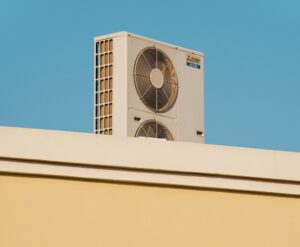
Heatwaves don’t cause commercial HVAC system failures, they expose them
This is the thing most businesses discover too late. A system limping along with a tired compressor, a slow refrigerant leak, or filters that haven’t seen an engineer in three years might get away with it through a mild autumn. Run it flat out for three weeks in a June heatwave and those minor issues become full breakdowns.
A fault that appeared in week two of the heatwave didn’t come from nowhere. The weather just made it impossible to ignore any longer, which means repairing the immediate problem fixes the symptom, not the system.
How long should a commercial HVAC system last?
Most commercial HVAC systems last between 15 and 20 years if properly maintained. That’s the baseline if your system assumes regular servicing, correct sizing, and installation quality that holds up over time.
In practice, the picture is often different. A system installed in 2008 and maintained inconsistently is now 18 years old, running in summers that are measurably hotter and more humid than when it was specced. Age alone isn’t the deciding factor, but it’s the starting point for every repair or replacement conversation.
The signs it’s time to replace your commercial HVAC system
It’s over 15 years old and has needed repeated repairs
One significant repair on an ageing system might be reasonable, but two or more in a short period is a different story. Each repair buys less remaining service life, and the cost of those repairs stacks up against a replacement that would have a 15-20 year lifespan ahead of it.
If the likely repair costs over the next 18 to 24 months are creeping towards a meaningful proportion of what replacement would cost, it’s time to stop patching and start planning for a replacement.
Energy bills are rising without explanation
Older systems work harder than they should as components wear and efficiency drops. That extra effort can show up directly in your energy bills.
HVAC accounts for up to 50% of commercial energy use, so an inefficient system has an outsized effect on operating costs. If bills have been creeping up and usage hasn’t changed, your system is the most likely cause.
It can’t maintain consistent temperatures
Uneven heating or cooling across different parts of the building (some rooms too hot, others comfortable) is often a sign that the system no longer has the capacity to meet demand.
The refrigerant it uses is restricted or being phased out
Since January 2026, virgin refrigerant with a GWP of 2,500 or more can no longer be used to service existing systems, which directly affects R404A at GWP 3,922.
What does this mean for you? Reclaimed gas can still be used, but supply is tightening and costs are rising sharply. If your system relies on a restricted refrigerant, every service visit is going to cost more than the last, and at some point, servicing becomes impossible altogether. Our F-Gas regulations guide covers this in more detail.
It couldn’t cope this summer
This is one of the most obvious signs. A system that failed, reduced output significantly, or required an emergency call-out during the heatwave is already showing signs of slowing down. Heatwaves expose existing weaknesses. Without addressing them, the same failures will follow next summer.
The Met Office has even suggested UK temperatures could reach 45°C by 2050, while winters could become even colder. What this means for businesses across the UK is clear: keeping on top of your commercial HVAC system has never been more important.
It’s making noises it didn’t used to make
Short cycling (where the unit fires on and off repeatedly without settling), unusual sounds from compressors or fans, ice on pipework, and warm air from vents are all signs that might point to a fixable fault. When paired together though, particularly on a system with a significant repair history, this usually points to something more fundamental.
Repair or replace: how to make the call
Repair is the right answer when the problem is isolated, the system is otherwise in decent shape, and the cost makes sense relative to what’s left of its working life. A five-year-old system with a failed fan motor gets a new fan motor, it’s that simple.
However, replacement makes more sense when the system is over 15 years old, repairs are becoming a regular occurrence, the refrigerant is restricted, and the building still can’t hold a comfortable temperature even after work has been done. At that point, continuing to patch things up almost never makes financial sense compared to a planned replacement.
Timing matters too. Replacing a system on your own terms (planned properly, off-peak, with a full survey and system design) is a very different experience to replacing it reactively when everything fails in the middle of August.
Why autumn is the right time to plan for a HVAC replacement
Demand for commercial air conditioning installation peaks in spring and summer, which is exactly when lead times extend and engineer availability tightens. Businesses that start the conversation now, while the summer’s experience is fresh and before the autumn planning cycle closes, are in a much stronger position.
How Atmostherm can help
With over 40 years’ experience in commercial HVAC across the North West, we carry out honest assessments of existing systems, not just equipment supply. If you’re not sure whether your commercial HVAC system needs replacing or can be extended with targeted maintenance, that’s exactly the conversation we can have.
Get in touch to arrange a no-obligation survey, or take a look at our case studies to see how we’ve helped businesses make that call.
Speak to a HVAC expert today
Enter your details below to get a call back from one of our HVAC experts.